 MYSTIC ROSE
Chronicle · Time & Traditions · 12 September 2026 · 5 min
One Sky, Many Calendars: How the World Counts Time
From the sacred cycles of the Maya to the calendar on your desk, humanity has found many ways to give time a shape.
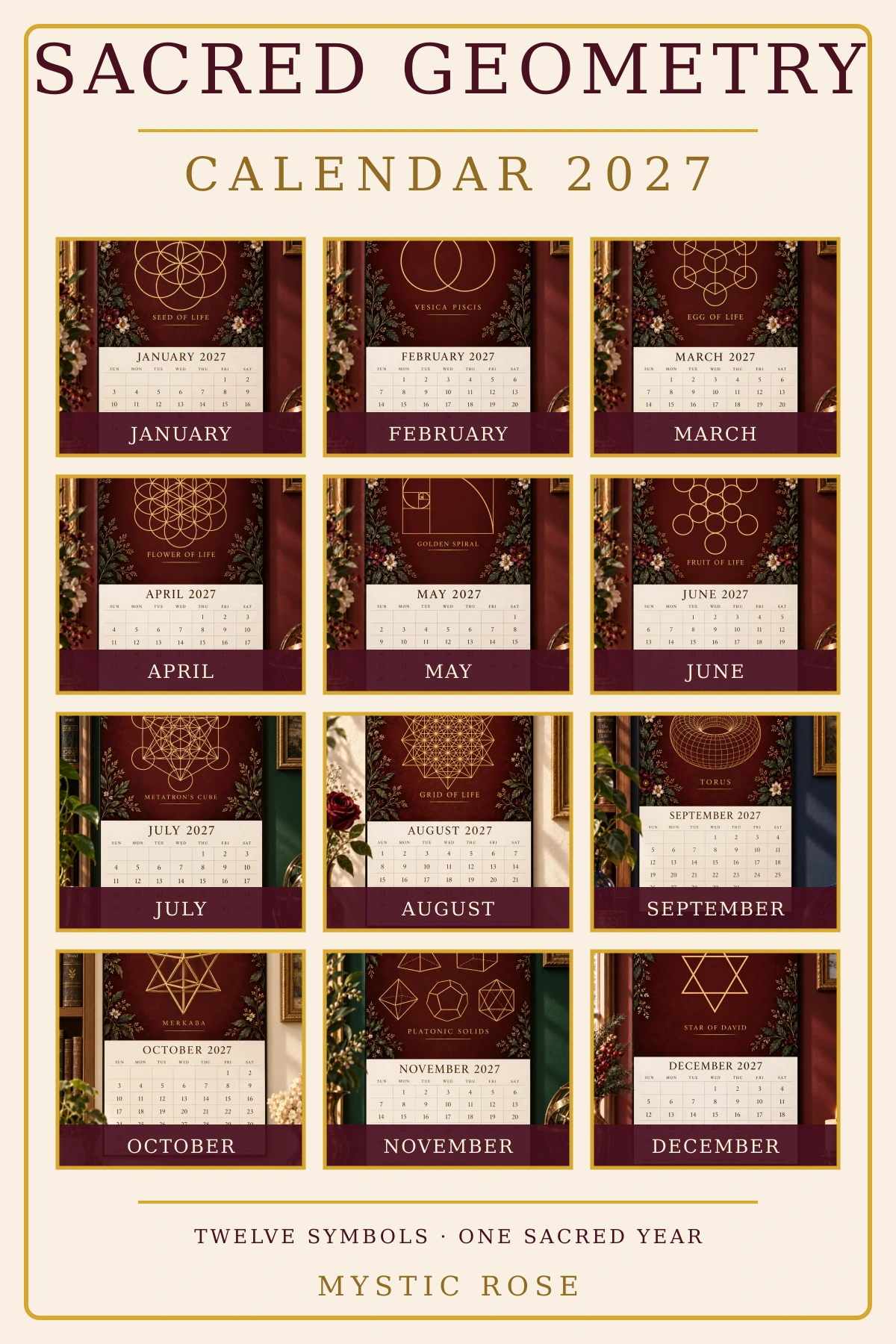
A calendar is a meeting place between the heavens and everyday life. It turns the movements of the Sun and Moon into seasons, celebrations, appointments and anniversaries.
Today, the Gregorian calendar connects much of the world through shared dates. Alongside it, other calendars continue to guide religious observances, cultural traditions and the beginning of a new year.
We share a planet. We give its days many names.
The Sun, the Moon and the Art of Keeping Time
Most calendars follow one of three approaches.
Solar calendars, including the Gregorian calendar, keep the year aligned with the seasons. Lunar calendars, such as the Islamic calendar, follow the phases of the Moon. Lunisolar calendars, including the Jewish and traditional Chinese calendars, combine lunar months with adjustments that keep the year connected to the Sun.
The challenge is mathematical: a lunar cycle and a solar year each contain a fractional number of days. Leap days and additional months help turn those celestial rhythms into usable calendars.
Ancient Egypt: A Year Written in Water and Starlight
For the ancient Egyptians, understanding the year was essential to life along the Nile. The river’s inundation shaped agriculture, while the reappearance of Sirius in the dawn sky provided an important seasonal marker.
Their civil calendar contained twelve months of thirty days, followed by five additional days: 365 days altogether.
Without a regular leap-day correction, its dates gradually shifted against the seasons. That small difference between a neat calendar and the astronomical year would become a recurring challenge in the history of timekeeping.
The Maya: Interlocking Circles of Time
The Maya developed a sophisticated system of overlapping counts, each serving a different purpose.
The Tzolk’in is a sacred 260-day cycle combining twenty day signs with thirteen numbers. The Haab’ comprises eighteen twenty-day months followed by five additional days, producing a 365-day year.
Together, these cycles form the Calendar Round. The same combination returns after 18,980 days — equivalent to fifty-two Haab’ years.
For longer spans, the Maya used the Long Count, recording elapsed days from a mythological starting point and placing events within a much larger chronology.
The much-discussed date of 21 December 2012 marked the completion of a major cycle. Its meaning was a calendrical turning point; popular apocalypse stories grew from a misreading of that tradition.
Maya timekeeping also remains a living heritage. In some communities, daykeepers continue to preserve and practise the sacred count.
From Rome to the Modern Calendar
Introduced under Julius Caesar and effective from 45 BCE, the Julian calendar established a 365-day year with a leap day every four years.
Its average year was slightly longer than the seasonal year. Over centuries, the difference accumulated.
The Gregorian reform of 1582 adjusted the dates and refined the leap-year rule. Century years became leap years only when divisible by 400: 2000 qualified, while 2100 will be an ordinary year.
Countries adopted the reform at different times. Today, the Gregorian calendar provides the principal framework for international civil life, while the Julian calendar continues to shape the religious observances of some churches.
Many Ways to Begin a Year
The Jewish calendar combines lunar months with a solar framework, adding an extra month seven times within a nineteen-year cycle. This keeps festivals connected to their seasons. Its year numbering follows a traditional religious chronology of creation.
The Islamic Hijri calendar contains twelve lunar months, making its year approximately eleven days shorter than the solar year. Ramadan therefore moves through the seasons over successive decades. Its era begins in 622 CE, the year of the Hijra from Mecca to Medina.
The traditional Chinese calendar combines lunar months with solar calculations and occasional leap months. It determines Lunar New Year and other traditional festivals. Its familiar twelve-animal sequence forms part of a larger sixty-year naming cycle.
The Persian Solar Hijri calendar places the beginning of the year at the spring equinox. Nowruz welcomes the returning spring, bringing the astronomical and cultural meanings of renewal together.
The Ethiopian calendar contains twelve thirty-day months and a short thirteenth month of five or six days. Its new year currently falls in September on the Gregorian calendar, and its year numbering reflects a different Christian chronological tradition.
A Place for Time in Everyday Life
Across these traditions, calendars carry both calculation and meaning. They help communities gather, preserve memories and welcome another season.
A calendar on a wall or writing desk brings that relationship into the home. Its pages offer a place for plans, small rituals and the quiet pleasure of beginning again.
Discover the Mystic Rose calendar collection, inspired by sacred geometry and angelic imagery, and choose a companion for your own unfolding year.
One day. A little space. A new possibility.
Editorial note: Factual claims are separated from symbolic interpretation. Mystic Rose is independent of the organisations discussed.